Category: Tooth Cavity

  • How to Remove Cavity from Teeth: A Complete Guide to Prevention, Treatment, and Pain Relief

    You must have searched this because something feels wrong in your mouth.Maybe it’s pain when you bite. Or a sharp zing on cold water. A cavity is a hole in the tooth made by bacteria. The bacteria feed on sugar, produce acid, and that acid slowly eats into the tooth. The earlier you catch it, the simpler the fix.

    You can’t remove a formed cavity at home. But if yours is still at the very early stage, a white patch with no hole yet, fluoride can actually stop it.

    At Elite Dental Studio Calicut, the dentist sees the exact stage of your cavity on the same visit using in-house OPG and digital X-ray imaging. No external trips, or waiting a week for results is needed . Serving 100,000+ patients since 2020, this guide by experts covers how to remove cavity from teeth fast and safely, what the dentist does and how to handle the pain.

    How Do Dentists Actually Remove a Cavity from the Tooth? (Professional Treatments)

    Once a cavity has formed a hole in the tooth, the dentist removes the decayed part and repairs what’s left. What that repair looks like depends on how deep the damage goes. Here’s what happens at the appointment:

    • Step 1: The dentist numbs the tooth. One injection of local anaesthetic. The area goes numb in a few minutes. You feel pressure during the procedure but not pain.
    • Step 2: The decay comes out. A dental drill removes the damaged tissue. At Elite Dental Studio, BioLase laser technology does this job with less discomfort and keeps more of the healthy tooth intact.
    • Step 3: The space gets cleaned and shaped. The cavity is prepared so the filling material bonds properly and stays in place.
    • Step 4: The tooth gets restored. Which type of restoration depends on how much of the tooth is still healthy.
      • Composite resin filling is what most people get. Tooth-coloured, bonds directly to the tooth, and works well for most cavities.
      • GIC filling (glass ionomer cement) slowly releases fluoride into the tooth around it, which helps prevent further decay.
      • Inlay or onlay is for larger cavities where a standard filling won’t hold.
      • Crown covers the whole tooth when too much structure has been lost for a filling to work.

    When decay reaches the pulp, the soft tissue with the nerve at the centre of the tooth, a root canal treatment from the dental clinic near me becomes necessary.
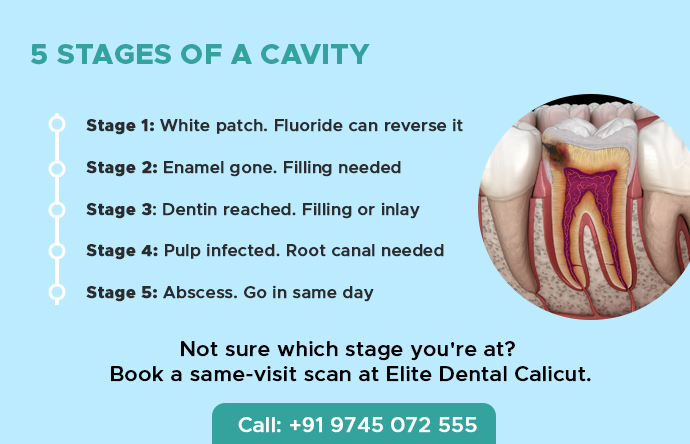
    5-stages-of-a-cavity

    Can a Cavity Be Reversed Before It Becomes a Hole? (Remineralisation)

    At Stage 1, the tooth has lost some mineral from the enamel surface but hasn’t broken through yet. You might see a dull white or chalky patch on the tooth. There’s no hole. At this stage only, the enamel can recover if the conditions change.

    • Fluoride toothpaste: Brush twice a day. Fluoride gets absorbed into the weakened enamel and makes it harder. It’s the only proven way to rebuild early mineral loss at home.
    • Cut sugar frequency: Every time bacteria contact sugar, they produce acid for about 20 minutes. Three sugar exposures a day means an hour of acid.
    • Drink more water and chew xylitol gum after meals:  Saliva washes acid off the teeth and delivers the minerals that repair enamel. Water keeps saliva going. Xylitol gum stimulates extra saliva and reduces the bacteria that cause decay.

    Once the enamel breaks through and a hole forms, none of this fixes it. You need the best dental clinic in Calicut.

    How Do You Relieve Cavity Pain Before Your Appointment? (Temporary Relief)

    Pain from a cavity means the decay is deep enough that the nerve is feeling it. These four things reduce the discomfort.

    • Salt water rinse – It lowers the bacteria count around the tooth and reduces the inflammation.
    • Clove oil- Clove oil contains eugenol, a natural numbing agent. It numbs the area for 20 to 30 minutes.
    • Cold pack on the cheek – 15 minutes on, 15 minutes off. It reduces swelling and numbs through the skin.
    • Ibuprofen- It tackles both pain and inflammation. Stick to the dosage on the pack.

    Go in the same day if you have throbbing pain that won’t stop, swelling in the face or jaw, or fever alongside the toothache.

    How Can You Prevent Cavities from Forming Again? (Prevention)

    Most people who get repeat cavities are brushing regularly. The issue isn’t brushing. It’s the gaps in the routine that bacteria use.

    • Brush twice daily with fluoride toothpaste.
    • Floss once a day.
    • Eat sugar at mealtimes, not between them.
    • Six-monthly professional clean.

    Book a Cavity Check at Elite Dental Studio Calicut

    The difference between a filling and a root canal is usually just time. A Stage 2 cavity at the dentist today is a 30-minute appointment. The same cavity in three months, when pain finally forces the booking, is a root canal.

    At Elite Dental Studio Calicut, the dentist sees the exact stage of your cavity at the same appointment using in-house OPG digital imaging and RVG X-rays. The BioLase laser removes the decayed tissue with less discomfort than drilling. The W&H Lina Eco B-class steriliser, imported from Austria, runs in every operatory. Conscious sedation is available if dental anxiety is what’s been keeping you from coming in.

    Every cavity case at Elite goes to an MDS-qualified restorative specialist. EMI options are also available. Call: +91 9745 072 555

    Frequently Asked Questions

    Can a cavity heal on its own without treatment?

    At Stage 1, a white patch with no hole yet, yes. Fluoride and cutting sugar frequency can reverse early mineral loss. Once a hole forms in the enamel, it doesn’t close on its own.

    How long does a cavity filling take at the dentist?

    A standard composite filling takes 30 to 60 minutes. The anaesthetic takes a few minutes to work, removing the decay takes 10 to 20 minutes, and placing and shaping the filling takes the rest.

    Is cavity removal painful?

    With local anaesthetic, no. You just feel pressure. Some sensitivity around the filled tooth for a day or two afterwards is normal as the tooth adjusts. If it’s still sensitive after a week, mention it to the dentist.

    How much does a cavity filling cost in Calicut?

    It depends on the cavity size, material, and tooth position. Elite Dental Studio gives you a written treatment plan with the cost before any work starts. EMI is available for higher-cost procedures.

    How do I know if I need a filling or a root canal?

    Pain that doesn’t stop, sensitivity that lingers more than 30 seconds after the cold trigger is gone, pain that wakes you at night, or swelling near the tooth. Any of these suggest the nerve is involved. A root canal is likely. A quick X-ray at the clinic confirms it in the same appointment.
  • Tooth Cavity: Symptoms, Causes, and Treatments

    A dull ache when enjoying a sweet treat or sensitivity to hot and cold beverages can be the first indicators of a much larger oral health concern — a tooth cavity. Tooth cavities, medically known as dental caries, are among the most common dental problems affecting individuals across all age groups. Understanding the cavities symptoms, recognizing the tooth decay causes, and exploring the available treatments are crucial for timely intervention and long-term oral health.

    What Is a Tooth Cavity?

    A tooth cavity is a permanently damaged area on the surface of a tooth that develops into tiny holes or openings. This damage results from a process called demineralization, primarily caused by bacteria, poor dental hygiene, and frequent consumption of sugary or acidic foods and beverages.

    These cavities can start small but, if untreated, can expand and affect deeper layers of the tooth. They can result in infection, severe toothache, and even tooth loss if not addressed on time.

    Common Cavities Symptoms to Watch For

    Early detection of a cavity can prevent extensive damage and costly procedures. Here are the most typical cavities symptoms:

    • Toothache or spontaneous pain
    • Sensitivity to sweets, hot, or cold temperatures
    • Visible pits or holes in the teeth
    • Discoloration (brown, black, or white staining)
    • Pain while chewing
    • Bad breath or a persistent bad taste in the mouth

    Sometimes, symptoms may go unnoticed until the decay has progressed significantly. This underlines the importance of regular dental check-ups.

    Tooth cavity

    Leading Tooth Decay Causes

    Understanding the root tooth decay causes is key to prevention. Here are the most prevalent reasons behind tooth cavities:

    1. Poor Oral Hygiene

    Neglecting regular brushing and flossing allows plaque to build up, which is rich in acid-producing bacteria that attack tooth enamel.

    2. Frequent Snacking and Sugary Drinks

    Sugars from foods and beverages are converted by mouth bacteria into acid, which leads to enamel erosion.

    3. Bacterial Growth and Plaque Formation

    Plaque hardens into tartar if not removed, providing a base for more bacteria and making it harder to clean the teeth.

    4. Dry Mouth (Xerostomia)

    Saliva helps wash away food particles and neutralize acids. A dry mouth can increase the risk of cavities due to a lack of natural rinsing.

    5. Tooth Location and Structure

    Back teeth (molars and premolars) are more prone to decay due to their grooves and difficulty in cleaning.

    6. Eating Disorders and Acid Reflux

    Conditions like bulimia and GERD expose teeth to stomach acids, increasing decay risk.

    Stages of Tooth Decay

    Tooth decay doesn’t happen overnight. It progresses through several stages:

    1. Initial Demineralization – Enamel begins to lose minerals, visible as white spots.
    2. Enamel Decay – Continued demineralization leads to surface damage.
    3. Dentin Decay – The inner dentin layer is affected, leading to pain and sensitivity.
    4. Pulp Involvement – The decay reaches the tooth’s pulp, causing severe pain.
    5. Abscess Formation – An infection can form at the root, possibly leading to systemic complications.

    Diagnostic Procedures for Tooth Cavities

    Professional dental evaluation is critical for identifying and assessing cavities:

    • Visual Examination – Dentists identify discoloration, holes, and enamel wear.
    • Dental X-rays – Essential to detect decay between teeth and beneath fillings.
    • Laser Fluorescence Devices – Measure changes in tooth density.
    • Cavity Detection Dyes – Highlight decayed areas.

    Early diagnosis helps avoid invasive treatments and preserves natural tooth structure.

    Treatment Options for Cavities

    Depending on the severity and location, cavity treatment may involve various restorative techniques:

    1. Fluoride Treatments

    For very early decay, fluoride applications help restore enamel.

    2. Dental Fillings

    Used for treating small to moderate cavities, fillings restore the tooth’s shape and function.

    3. Crowns

    When large portions of the tooth are damaged, crowns provide full coverage and restore strength.

    4. Root Canal Treatment

    Necessary when decay infects the pulp. The infected tissue is removed, and the root is cleaned, filled, and sealed.

    5. Tooth Extraction

    A last resort when the tooth is beyond saving. Alternatives like implants or bridges may be recommended post-extraction.

    6. Minimally Invasive Techniques

    Technological advances now allow for air abrasion and laser cavity treatment for less pain and precision.

    Preventing Tooth Cavities: Best Practices

    While modern dentistry provides excellent solutions, prevention remains the best approach.

    Daily Oral Care

    • Brush at least twice daily using fluoride toothpaste
    • Floss daily to remove food and plaque between teeth
    • Use antibacterial mouthwashes to reduce bacterial load
    • Replace toothbrushes every 3–4 months

    Diet and Lifestyle

    • Avoid frequent snacking, especially sugary treats
    • Drink fluoridated water
    • Incorporate teeth-friendly foods like cheese, nuts, and fibrous vegetables

    Professional Care

    Regular dental visits are non-negotiable for prevention. A dentist in Kannur, or a well-equipped dental clinic in Calicut, can provide preventive care and guidance to ensure lifelong oral health.

    Pediatric and Geriatric Cavity Considerations

    Children

    Children are more susceptible to cavities due to developing brushing habits and frequent snacking. Sealants and fluoride varnishes are effective preventive measures.

    Elderly

    Older adults may experience increased cavities due to dry mouth from medications or gum recession. Special attention to oral hygiene and diet is crucial.

    The Role of Dental Technology in Cavity Management

    Modern dental clinics, including those like Elite Dental Studio, use cutting-edge tools such as:

    • Digital radiography for precise cavity detection
    • Intraoral cameras for real-time monitoring
    • Laser dentistry for pain-free cavity removal

    These technologies enhance patient comfort and treatment success rates.

    Cost Factors in Cavity Treatment

    The cost of cavity treatment varies depending on severity, materials used, and clinic location. Patients in Kerala seeking services from a dentist in Kannur, a dental clinic in Calicut, or the best dental clinic in Kochi can expect a range of affordable and advanced care options.

    Insurance coverage may reduce out-of-pocket expenses, especially when the treatment is preventive or medically necessary.

    Cavity Complications If Left Untreated

    Tooth cavities can lead to serious health issues if ignored:

    • Chronic pain and infections
    • Difficulty eating and speaking
    • Tooth loss and shifting of surrounding teeth
    • Spread of infection to other body parts (in rare cases)

    Protecting Smiles Starts with Awareness!

    Tooth cavities are preventable, manageable, and treatable when approached with the right knowledge and action. Recognizing cavities symptoms, understanding tooth decay causes, and taking timely measures are fundamental to optimal oral health.

    Routine care, supported by professional check-ups at reliable centers like Elite Dental Studio, helps preserve dental health for years to come. For anyone searching for a trusted dentist in Kannur, a comprehensive dental clinic in Calicut, or the best dental clinic in Kochi, informed decisions can make all the difference.

    Frequently Asked Questions:

    What are the early signs of a tooth cavity?

    Ans. Early signs include tooth sensitivity, mild pain while eating sweets, and visible white or dark spots on the tooth.

    How can I prevent cavities naturally?

    Ans. Regular brushing, flossing, limiting sugar intake, and visiting a dentist in Kannur or your local clinic for check-ups can help prevent cavities.

    Are cavities contagious or hereditary?

    Ans. Cavities are not contagious but can be influenced by genetics and shared bacterial transmission in families.

    Is it necessary to fill a small cavity?

    Ans. Yes, even small cavities should be treated early to avoid deeper tooth decay and costlier procedures later.

    Can tooth decay reverse on its own?

    Ans. Early-stage demineralization can sometimes be reversed with fluoride and proper care, but actual cavities need treatment.

    What’s the best treatment for deep cavities?

    Ans. Deep cavities often require fillings, root canal treatment, or crowns, depending on the severity and location of the decay.