Category: pediatric dentist

  • Guide to Oral Hygiene for Kids: Daily Dental Care Routine Tips

    “My child brushes every day.” We hear this a lot. And then we look inside the child’s mouth and find three or four teeth with early decay. So what went wrong?

    Usually 20 seconds of brushing, no flossing, and a glass of Horlicks right before bed is not a good dental routine.

    Childhood tooth decay is one of the most common health problems in children worldwide. Most of it is preventable, with the right fluoride, proper brushing, flossing and a few basic diet habits.

    The pediatric dentistry specialists at Elite Dental Studio since 2020 work with children and parents every day across clinics in Calicut, Kochi, Coimbatore and Kannur.

    This oral hygiene for kids: a parent’s guide to healthy smiles by our dental experts is what we actually tell parents at a first visit.

    What Does a Daily Dental Routine for Kids Look Like?

    One step in daily dental routine gets skipped, supervision drops off, or the timing is slightly off. Small gaps like these are where severe dental problems quietly build. Here’s the full routine, step by step.

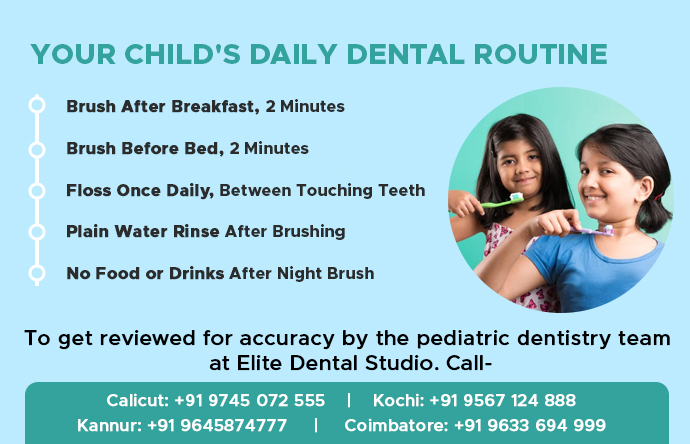
    Step 1: Brush After Breakfast

    Timing matters. Brush before breakfast, and whatever food your child eats sticks onto the teeth for hours without being cleared. Brushing after helps remove that food before the bacteria living in the mouth can start breaking it down.

    How to Brush Correctly:

    • Use a Soft-bristle toothbrush only. Soft means the bristles bend when pressed gently.
    • Fluoride toothpaste from age 2. Fluoride is a natural mineral that makes tooth enamel harder. Stronger enamel means bacteria take longer to get through it.
    • Two full minutes. Most children stop before that. Use a phone timer, a brushing app or just play a song.
    • Brush the front of each tooth, the back and the flat chewing surface on top.

    Step 2: Brush Before Bed

    Night brushing matters more than morning brushing because during the day, your mouth produces saliva continuously. Saliva is the watery liquid in your mouth that naturally washes bacteria off your teeth as the day goes on. At night, saliva production slows down significantly. So whatever bacteria are on the teeth when your child goes to sleep stays there, undisturbed, for 7 to 8 hours.

    Step 3: Floss Once a Day

    Flossing is the step that most families skip completely. But a toothbrush physically cannot reach the gaps between teeth. Food and bacteria collect in those gaps and cause decay from the side of the tooth, often with no visible sign until the hole is already deep.

    Start flossing when two teeth sit right next to each other. For most children, that’s around age 2 to 3.

    If gums bleed a little in the first week of flossing, that’s normal. It means those gaps weren’t being cleaned before. Bleeding stops once flossing is regular.

    Still bleeding after two weeks? Mention it to the kids dentist near me.

    Step 4: Water Rinse

    After brushing and flossing, a quick rinse with plain water clears anything loose from the mouth. Mouthwash isn’t needed for children under 6. Just water works fine.
    your-child's-daily-dental-routine

    Daily Dental Care for Each Age

    The same four steps are followed at every age. What changes is how much help your child needs.

    Age What to Do Who’s Doing It
    Under 2 Wipe gums with a damp cloth after feeds.

    Brush the first tooth with a small amount of toothpaste.

    Parents do everything.
    2 to 5 Brush twice daily with a pea-sized amount of fluoride toothpaste.

    Floss once daily.

    Parents do it. Child watches.
    6 to 9 The child brushes while the parent watches.

    The parent corrects technique and checks time.

    Floss together.

    The child tries. Parents correct.
    10 and above The child runs the full routine. Parent checks once a week.

    Essential Care and Prevention Tips for Kids’ Teeth

    A wrong toothbrush is a real problem. Most parents keep the same toothbrush for too long, choose a size that’s too big, or pick one with hard bristles thinking it cleans better. It doesn’t. Here are 5 essential tips to follow for your kid’s teeth:

    • Use soft bristles toothbrush with grain or pea size toothpaste.
    • Replace the toothbrush every 3 months. Splayed, flattened bristles miss more surface than they clean.
    • Let your child pick the colour or the character on the handle. A toothbrush they chose gets used .
    • Always use fluoride toothpaste from age 2. Without fluoride, there’s no enamel protection.
    • Do flossing right after the night brush when teeth-cleaning is already happening. Don’t try to introduce it as a separate thing.

    Food That Helps Teeth and Food That Hurts

    Every meal affects your child’s teeth, slowly, over months and years. It’s not about which food you eat. It’s about how often. Every time your child eats something sweet, the bacteria in the mouth produce acid for around 20 minutes. And over months, enamel breaks down. Here a list of food that helps and hurts your child’s dental health:

    Good for Teeth Keep These Limited
    Milk, curd, cheese Fizzy drinks, packaged fruit juices
    Apple, guava, carrot, cucumber Sticky sweets, toffees, jaggery candy
    Dal, eggs, fish, chicken Biscuits and chips snacked on throughout the day
    Plain water Sweet drinks close to bedtime
    Idli, dosa, rice (all fine) Sugary breakfast cereals

    One specific habit to stop right now: Don’t let your child sleep with a bottle of milk, formula or juice. That liquid pools around teeth all night. The dentist calls it baby bottle tooth decay. Widespread early decay across the front teeth of young children comes from this habit.

    When Should You Take Your Child to a Pediatric Dentist?

    Most parents wait until a child is 3 or 4, or until something hurts. By then, decay that could have been caught and managed easily had developed more and became worse. Visit a pediatric dentist near me by age 1. Or when the first tooth appears. Whichever comes first.

    Come In Earlier If You Notice Any of These

    Don’t wait for the next scheduled check-up if your child has any of the following:

    • A dark spot or brownish patch on a tooth
    • Tooth pain or sensitivity to cold, sweet or hot food
    • Gums that look swollen, red or bleed when brushing
    • A tooth knocked out or chipped in a fall
    • Teeth growing in crooked, crowded or in the wrong position
    • A milk tooth that came out much earlier than expected
    • A new tooth pushing through while the milk tooth is still sitting there

    Book a Pediatric Dental Check-Up at Elite Dental Studio.

    A pediatric dentist, also called a pedodontist, has completed a full dental degree and then done additional years of specialist training specifically for children’s dental care. That training covers how baby teeth develop and fall out, how adult teeth grow in to replace them, how the jaw changes from infancy through the teenage years, and how to manage care for children who are anxious, scared or resistant in the dental chair.

    At Elite Dental Studio, children receive check-ups, fillings, fluoride application (a gel or varnish painted onto teeth to make enamel significantly stronger), dental sealants (thin protective coatings applied to the grooves on back teeth so food and bacteria can’t settle in), space maintainers (small appliances that hold a gap open when a milk tooth is lost early so the adult tooth has room to come in correctly), and habit correction when needed.

    Every treatment plan at Elite Dental Studio is based on what your specific child’s teeth, age and habits actually need.

    If you’re looking for a kids dentist near me, in Calicut, Kochi, Coimbatore or Kannur, call and book a pediatric check-up.

    • Calicut: +91 9745 072 555
    • Kochi: +91 9567 124 888
    • Kannur: +91 9645874777
    • Coimbatore: +91 9633 694 999

    Frequently Asked Questions

    At What Age Should a Child First See a Dentist?

    By age 1 or when the first tooth appears, whichever comes first. It’s a check-up visit, not a treatment. The dentist checks that teeth are coming in correctly and shows parents how to clean a young child’s teeth at home. Children who start early are also much less anxious about dental visits as they grow.

    How Much Toothpaste Is Safe for a Toddler?

    Under 2 years: a smear, thin as a grain of rice. Age 2 to 6: pea-sized, one small blob. Always fluoride toothpaste from age 2. Teach your child to spit it out. At these amounts, swallowing a little isn’t dangerous. But spitting is the right habit to build.

    When Should Kids Start Flossing?

    When two teeth are sitting next to each other, usually around age 2 to 3. Parents do it for the child until around age 8 to 10. Child floss picks are the easiest tool for young children. String floss is hard to manage in a small mouth.

    Are Fluoride Treatments Safe for Children?

    Yes, when a dentist applies them in the right amount for the child’s age. According to the CDC, fluoride varnish can prevent around one-third of cavities in baby teeth. Your dentist checks your child’s cavity risk and decides whether a fluoride treatment is appropriate at each visit.

    How Do I Get My Child to Brush Without a Battle?

    Same time every night without negotiation. Let the child pick their own toothbrush. Play a two-minute song. For very young children, pretend you’re hunting “sugar bugs” hiding on the teeth. Brush at the same time your child brushes. Children copy what they see. No evening is perfect. A short brush done every night is far more useful than a thorough brush done twice a week.

  • Look For A Pediatric Dentist For Your Infant’s Teeth

    A pediatric dentist visit for your infant is best when the first tooth appears. Early visit is quick, gentle, and focused on prevention, thus, it must happen within 6 months of the first tooth eruption or by the age 1, whichever comes first.

    If you are searching for a kids dentist in Calicut, Elite Dental Studio provides pediatric dentistry with a child-friendly preventive approach, so you get clear guidance on your infant teeth health.

    This guide by our experts explains why early visits to pediatric dentist in Calicut matter, what to look for, what happens in the visit, and how to protect baby teeth at home.

    When Should You Start Looking For A Pediatric Dentist For Your Infant’s Teeth?

    One tooth is enough to start risk checks and prevention as baby teeth can decay faster and early decay can look like simple white spots. In any case, if your baby has no teeth, you can start with these quick steps:

    • Wipe gums daily with a clean, soft cloth after feeding.
    • Watch for gum swelling, unusual patches, or bad breath that does not settle.

    Why Does Pediatric Dentistry Matters For Infants?

    Pediatric dentists spot early decay signs and gum irritation. As decay can spread faster in baby teeth, most infant visits focus on prevention and habits, along with gentle handling.

    Why Do Infants Need A Pediatric Dentist If They Only Have Milk Teeth?

    Baby teeth help in chewing, speech, and spacing for adult teeth, so early care often prevents avoidable decay and pain. Milk teeth are not temporary or extras so when a baby tooth gets cavities early, it can affect feeding, sleep, and comfort. Here are things which parents miss in infants:

    • Early white spots: first sign of enamel breakdown.
    • Bottle cavities: Milk or sweet liquids on teeth at night
    • Gum irritation: Inflamed gum tissue which look like teething.

    What Should You Look For In A Pediatric Dentist In Calicut For Infants?

    Look for a child focused dentist, specialized in preventive guidance, gentle handling, and clear parent education. Use this checklist when choosing a kids dentist in Calicut:

    • Baby-safe exam style: The dentist keeps the exam quick and gentle.
    • Comfort-first set-up: The clinic feels calm for babies.
    • Prevention plan: You get clear guidance on brushing, feeding habits, etc.
    • Hygiene protocols: Clean environment, safe instruments, and clear standards.
    • Parent coaching: You are taught how to clean and brush instead of just instructions.

    Red flags to watch for:

    • The visit feels rushed, and you leave with more confusion.
    • No one asks about feeding habits, night bottle, or brushing routine
    • The clinic suggests treatment without explaining why.

    Things to Ask A Pediatric Dentist At Your Baby’s First Visit

    Ask questions that help you prevent cavities, manage teething, and build safe daily routines. These questions keep the visit productive and compare clinics quickly.

    1. When should brushing start for infants, and what toothbrush to use?
    2. Exact amount of toothpaste that is right for baby
    3. Does night feeding increase cavity risk, and what is the safer routine?
    4. Are these white spots normal, or do they look like early decay?
    5. How do we clean after milk feeds, especially at night?
    6. How often should the check-ups be planned in the first few years?
    7. Warning signs to consider for an earlier visit

    If you are searching for a pediatric dentist near me, these questions help you choose a clinic that explains clearly and supports you through the early years.

    How Do You Care For Infant Teeth At Home Between Visits?

    Home care for infant teeth involves wiping gums daily, brushing from the day the first tooth appears, and avoiding sugary liquids settling on teeth.

    Day Routine

    • Wipe gums with a clean cloth once a day, even before the teeth erupt.
    • Brush erupted teeth gently twice a day with a soft baby brush.
    • Offer water after feeds as per your pediatrician’s advice.

    Night Routine

    • Brush the last thing before sleep.
    • Avoid letting milk pool in the mouth after brushing.
    • If night feeds happen, wipe the gums and teeth gently afterward when possible.

    Teething Relief Do’s And Don’ts

    Do:

    • Use a clean, cold teething ring.
    • Gently massage gums with a clean finger.

    Do not:

    • Use sugary teething gels without professional advice.
    • Put honey on pacifiers for soothing.

    Most early decay starts from small daily habits, not from one big mistake. A steady routine protects baby teeth. When searching for a kids dentist near me, keep a note of patterns like white spots, night feeding, or gum swelling. These details help the dentist give an accurate plan for your baby.

    Book A Pediatric Dentist Visit At Elite Dental Studio In Calicut

    Elite Dental Studio provides pediatric dentistry with a child-friendly environment so infant visits stay calm and helpful for both baby and parents. Our expert dentists supports infant dental care with:

    • Pediatric dentistry services designed around children’s comfort and prevention.
    • Expert pediatric dentists including dentists trained in child-friendly behavior management and preventive care.

    Book an appointment with a pediatric dentist in Calicut at Elite Dental Studio. Call +91 9745 072 555.

    FAQs

    When should my baby see a pediatric dentist for the first time?

    The first dental visit should be planned within 6 months of the first tooth eruption or by the time your baby turns 1.

    What if my baby has no teeth by 12 months?

    The dentist can check gums, oral habits, and feeding patterns, even if your baby has no teeth. And can guide you on what to do while you wait for teeth to erupt.

    Can night feeding cause cavities?

    Frequent night feeds can increase the risk of cavity if milk or sweet liquids sit on teeth. A dentist can help you adjust routines without stressing your baby.

    What toothpaste is safe for infants?

    Use a baby-safe fluoride toothpaste in a very small amount, based on age and risk factors. Your pediatric dentist can guide the exact amount for your baby.

    How often should infants visit a pediatric dentist?

    Many families benefit from regular preventive visits based on risk. Your dentist will recommend the right interval after the first check.

  • Brushing Too Hard: Can It Damage My Child’s Teeth?

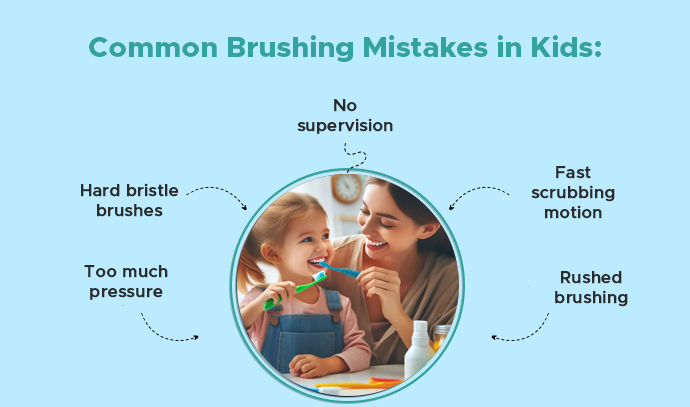
    Brushing is the first step to keeping your child’s smile healthy. But did you know that children brushing teeth too hard can actually cause damage to teeth and gums. Many parents think that brushing harder cleans better, but this common mistake can wear down enamel, hurt gums, make teeth sensitive and may lead to permanent damage over time.

    At Elite Dental Studio, we help parents understand the risks of brushing and kid’s oral health, spot the warning signs, and teach simple solutions to protect your child’s teeth. Read on to learn how to prevent damage to your kids’ oral health, correct brushing habits, and keep your child’s smile strong and happy.

    common-brushing-mistakes-in-kids

    Why Brushing Too Hard Is Harmful for Children?

    Children’s teeth are not as strong as adult teeth. The enamel of the outer protective layer is thinner and more vulnerable. Brushing too aggressively can:

    • Wear Down Enamel: Over time, harsh brushing erodes enamel, leaving teeth more prone to sensitivity and cavities.
    • Damage Gums: Forceful brushing can cause gum recession, exposing tooth roots and increasing the risk of decay.
    • Cause Sensitivity: Exposed enamel or roots can lead to pain with hot, cold, or sweet foods.
    • Affect Tooth Development: In primary teeth, enamel damage or gum recession can influence how permanent teeth grow in.

    Even though children brush daily, improper technique can slowly create long-term dental problems.

    Signs That Your Child Is Brushing Too Hard

    Recognizing the problem early can prevent irreversible damage. Watch for these warning signs:

    • Sore or bleeding gums after brushing,
    • Tooth sensitivity to hot, cold, or sweet foods,
    • Flattened or grooved tooth surfaces,
    • Rapidly fraying toothbrush bristles,
    • Visible gum recession around certain teeth.

    If your child shows any of these signs, it is time to adjust brushing habits and consult a pediatric dentist near me.

    Common Reasons Children Brush Too Hard

    Understanding why children apply too much pressure helps in correcting the habit:

    • Belief that harder brushing cleans better,
    • Imitating adults who brush aggressively,
    • Using medium or hard bristle toothbrushes,
    • Rushing to finish brushing quickly,
    • Lack of supervision,
    • Anxiety or discomfort while brushing.

    Addressing these causes early ensures safer brushing and healthier teeth.

    The Correct Brushing Technique for Children

    Proper technique is more important than pressure. Parents should teach and supervise children until the habit is established.

    1. Choose a Soft Bristled Toothbrush: Soft bristles are gentle on enamel and gums, reducing the risk of damage.
    2. Use a Pea-Sized Amount of Toothpaste: Too much toothpaste can create excessive foam, tempting children to brush harder.
    3. Hold the Brush Like a Pencil: This naturally limits the pressure applied to teeth.
    4. Use Gentle Circular Motions: Instead of scrubbing back and forth, use small circles to remove plaque effectively.
    5. Brush All Surfaces for 2 Minutes: Divide time evenly for outer, inner, and chewing surfaces.
    6. Lightly Brush the Tongue: Removes bacteria without applying force on sensitive tissues.

    Step-by-Step Brushing Routine for Kids

    A simple routine helps children brush correctly without damaging teeth:

    1. Wet the toothbrush and apply a pea-sized amount of fluoride toothpaste,
    2. Position the brush at a 45-degree angle to the gumline,
    3. Move in gentle, small circular motions,
    4. Spend 30 seconds on each quadrant of the mouth,
    5. Brush chewing surfaces with soft strokes,
    6. Brush the inner surfaces gently,
    7. Lightly brush the tongue to remove bacteria,
    8. Rinse the mouth and inspect in the mirror for missed spots.

    This routine ensures teeth are clean without the risks associated with excessive pressure.

    Toothbrushes and Apps That Help Prevent Hard Brushing

    Modern tools can train children to brush gently:

    • Soft-bristled toothbrushes designed for kids,
    • Electric toothbrushes with pressure sensors that alert when brushing too hard,
    • Color-changing toothbrushes to show wear and encourage replacement,
    • Timer-based brushing apps to ensure the recommended two-minute brushing.

    Using these tools makes brushing safe and fun for children.

    Correcting Damage from Overbrushing

    If overbrushing has already caused harm, early intervention is key:

    • Fluoride Applications: Strengthen enamel and reduce sensitivity,
    • Desensitizing Toothpaste: Provides relief for mild sensitivity,
    • Composite Fillings: Restore grooves or worn areas on teeth,
    • Gum Care: Proper brushing technique and gentle care can reverse early gum recession,
    • Regular Checkups: Monitoring by a pediatric dentist in Calicut ensures early detection and management.

    Prompt action prevents further damage and preserves the child’s dental health.

    Age-Based Brushing Guidelines

    • Ages 2–5: Parents should supervise brushing and guide gentle movements.
    • Ages 6–9: Children can brush independently but need reminders for correct pressure.
    • Ages 10+: Kids understand pressure better, but supervision ensures they maintain proper habits.

    When to See a Pediatric Dentist?

    Parents should seek professional help for their kids if:

    • Tooth sensitivity persists,
    • Enamel appears worn or grooved,
    • Gums are sore or receding,
    • Toothbrush bristles fray quickly,
    • Bleeding occurs after brushing.

    Early consultation with a pediatric dentist near me ensures that minor issues do not become long-term problems.

    Why Choose Elite Dental Studio for Pediatric Care?

    A specialised pediatric dentist understands children’s unique dental needs and guides them with patience. Elite Dental Studio offers:

    • Child-friendly environment and gentle treatment techniques,
    • Advanced tools for monitoring enamel and gum health,
    • Experienced pediatric dentists in Calicut for early detection and preventive guidance.

    Choosing the right pediatric dentist ensures that children brushing teeth too hard receive expert advice and safe treatment. Brushing too hard can silently damage your child’s teeth, causing sensitivity, enamel wear, and gum problems. The good news is that proper technique, gentle brushing, and early intervention prevent long-term issues.

    If your child shows signs of overbrushing or discomfort, schedule a visit with a pediatric dentist near me today. Start preventive care, correct brushing habits, and protect your child’s smile for a lifetime. Call Elite Dental Studio at +91 9048 611 911 now to book your consultation and ensure healthy, happy teeth for your child.

    Frequently Asked Questions:

    Can brushing too hard really damage my child’s teeth?

    Ans. Yes. Children brushing teeth too hard can wear down enamel, cause gum recession, and lead to tooth sensitivity. Proper technique and gentle pressure are essential to prevent long-term dental issues.

    What are the signs that my child is brushing too hard?

    Ans. Look for sore or bleeding gums, flattened or grooved tooth surfaces, sensitivity to hot or cold foods, and fraying toothbrush bristles. These are clear indicators that brushing pressure may be too high.

    How can I help my child brush correctly?

    Ans. Use a soft-bristled toothbrush, apply a pea-sized amount of toothpaste, and teach gentle circular brushing motions. Holding the toothbrush like a pencil and supervising brushing helps children maintain safe pressure.

    When should I visit a pediatric dentist for hard brushing issues?

    Ans. If your child experiences persistent sensitivity, worn enamel, sore gums, or bleeding while brushing, it’s time to consult a pediatric dentist in Calicut or search for a kids dentist near me for evaluation and early intervention.

    Can overbrushing be reversed or treated?

    Ans. Yes. Early intervention can help. Treatments may include fluoride applications, desensitizing toothpaste, minor restorative procedures, and guidance from a pediatric dentist near me to correct brushing habits and protect teeth.


  • The Role of a Pediatric Dentist in Making Dental Visits Fun

    Ever noticed children’s fascination with the playground, and then immediately, when someone says dentist, they don’t quite feel up for it? Dental check-ups leave children on edge, but not with an experienced kids dentist, who can change fear with fun. A pediatric dentist in Calicut, Kochi, or Kannur working with Elite Dental Studio has just what it takes to make dental check-ups relaxing, interactive and even enjoyable for children. Their goal? To leave children with a pleasant experience and foster good oral habits for a lifetime.

    Let’s see how the Role of a Pediatric Dentist makes dental visits fun for kids, helps them feel comfortable and ensures they leave with a happy & healthy smile.

    Why Do Kids Fear the Dentist?

    Let’s first understand the problem before we talk about solutions. Why do kids hesitate when it’s time for a dental check-up?

    Fear of Unknown

    Unfamiliar sights, sounds, instruments and masked professionals can make a dental visit intimidating for kids. Without knowing what to expect, their imagination creates fear which makes them anxious about the experience.

    Past negative experiences

    A painful procedure in the past like an injection or extraction might make them anxious about future visits. They may link the visit to a dentist with discomfort and fear even if it’s just a routine check-up.

    Loss of control

    Sitting still while someone checking their mouth can feel overwhelming. Pediatric dentists ease this by explaining steps, showing them the tools and involving them to make them feel in control.

    Parental anxiety

    Kids sense their parents’ emotions. If parents fear the dentist, children pick up on it too. Staying positive and avoiding scary words helps kids feel more comfortable and confident.

    Pediatric dentists create a comfortable and engaging experience by understanding these fears, Making Dentist Visits fun for Childand even excited about their next visits.

    How a Pediatric Dentist Makes Dental Visits Fun for Kids

    Our experienced pediatric dentist in Kannur, Kochi, or Calicut at Elite Dental Studio does more than just check teeth, they turn a potentially scary visit into an enjoyable experience. Here’s how:

    1. A Kid-Friendly Environment

    • Bright, colorful clinics with fun themes
    • Play areas, cartoons, and storybooks in the waiting room
    • Friendly staff trained to interact with kids in a warm, engaging manner

    2. Gentle and Interactive Approach

    • Using child-friendly language to explain procedures (“Let’s count your teeth!” instead of “I’m examining your molars.”)
    • Showing kids the instruments before using them to remove the fear factor
    • Encouraging kids to ask questions so they feel in control

    3. Engaging Education

    • Teaching kids about oral hygiene through fun activities
    • Demonstrating proper brushing techniques using puppets or cartoons
    • Sharing fun facts about teeth to keep them interested

    4. Positive Reinforcement and Rewards

    • Giving out stickers, small toys, or certificates for bravery
    • Praising kids for cooperation and good behavior
    • Turning dental visits into a game (“Let’s see how shiny we can make your teeth today!”)

    5. Pain-Free Procedures with the Latest Technology

    • Using advanced pain-management techniques to ensure treatments are comfortable
    • Offering sedation dentistry for kids who are extra anxious
    • Creating a stress-free experience so kids leave with happy memories

    Role of Parents in Making Dentist Visits Fun for Kids

    Parents play a very important role in shaping how their child feels about the dentist. Here’s how you can help:

    • Stay positive – Avoid saying words like “pain” or “shot” before the visit.
    • Read books about dentist visits – Fun stories help children relate and feel prepared.
    • Play pretend – Let kids “be the dentist” and check your teeth at home.
    • Reward their bravery – A fun outing or a small treat after a visit can make the experience rewarding.
    • Find the best pediatric dentist near me – Choosing a skilled pediatric dentist ensures a fun and comfortable visit.

    Why Are Regular Pediatric Dental Visits Important?

    Missing dental visits can cause oral health problems later. Regular check-ups:

    • Prevent cavities before they become painful
    • Detect early signs of dental problems
    • Teach kids good oral hygiene habits from an early age
    • Build a positive relationship with the dentist for stress-free visits

    If you are looking for a pediatric dentist in Kochi, Calicut or Kannur you can trust the expertise of Elite Dental Studio. Regular visits will keep your child’s smile bright and their experience enjoyable.

    Making Dental Visits Fun at Elite Dental Studio

    At Elite Dental Studio, we understand how important it is to make dental visits fun and stress-free for children. Our expert kids dentist team specializes in handling young patients with patience, warmth, and engaging techniques. Whether you are searching for the best pediatric dentist near me or a comfortable space where your child can feel comfortable, we have got you covered. Here is what you will enjoy:

    • Our clinics are designed with kids in mind to make them feel welcome and relaxed.
    • We use the latest pain-free techniques to ensure a comfortable experience.
    • Our dentists engage with children through fun education and positive reinforcement.

    Make your child’s next dental visit something they’ll look forward to because healthy smiles start with happy visits.

    Conclusion

    A skilled pediatric dentist embraces the Role of a Pediatric Dentist by making dental visits enjoyable and stress-free for children. They focus on creating a welcoming space, using interactive education and practicing gentle care to ensure kids feel comfortable, safe and excited about their oral health.

    At Elite Dental Studio, our goal is to make every child’s dental visit an enjoyable experience. Book an appointment today and let us turn dental care into a fun adventure for your child!